
No, it is not too late. Adults have less time and more settled pronunciation habits, but memory still works the same way: spaced practice and reciting from memory help at any age. Start with the letters and a small daily portion, read to a teacher who corrects you, and let revision carry as much weight as new memorization.
Many adults carry a quiet regret: they never memorized much of the Quran as children, or they memorized it and lost it, or they read with mistakes they have never had corrected. Then the thought arrives: is it too late now? It is not. Adults learn differently from children, but they learn, and the Quran itself invites every reader, at every age, to come back to it.
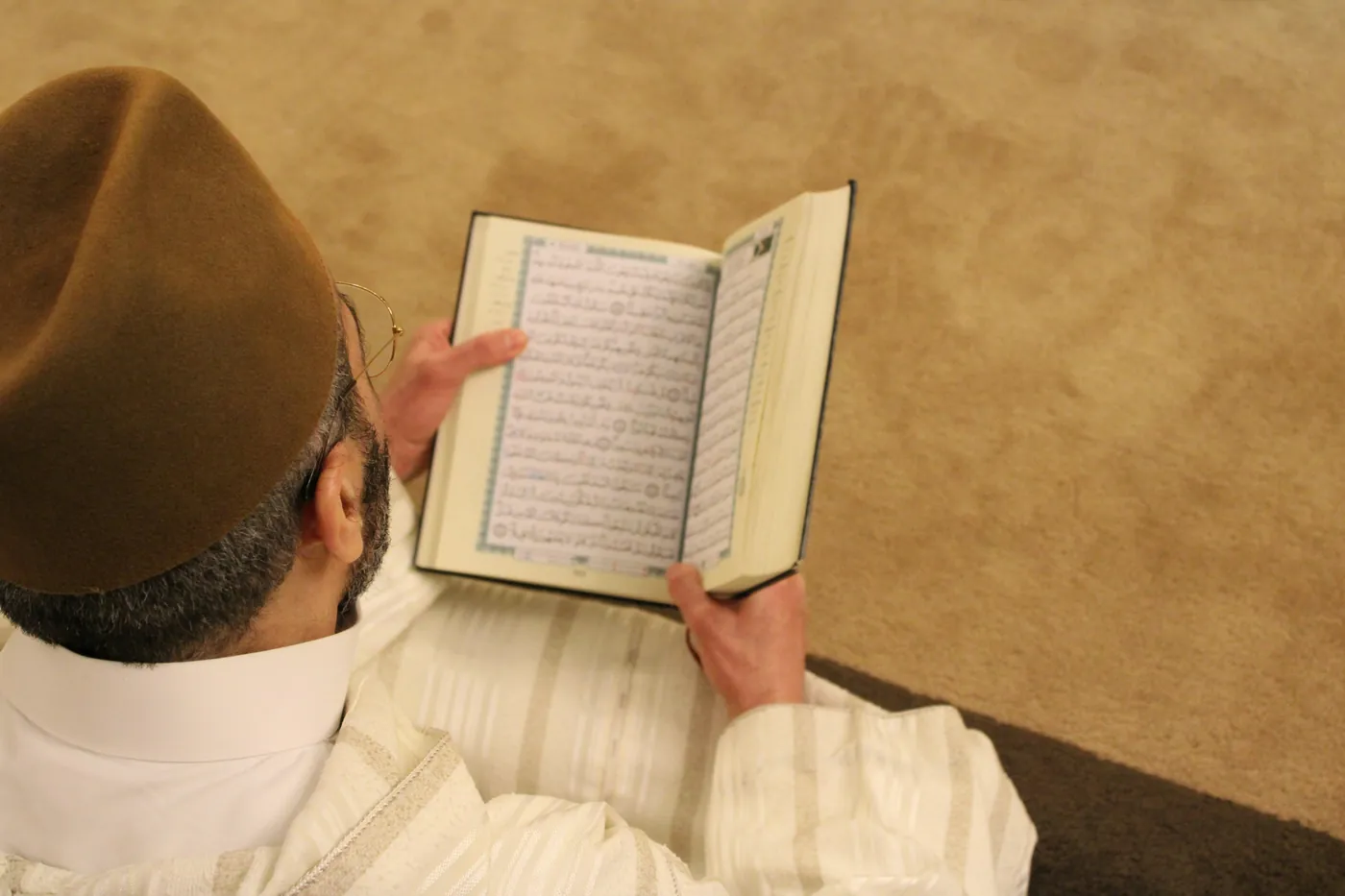
This guide looks at what really changes after thirty, what does not, how to approach Tajweed and memorization as an adult, how to deal with embarrassment, and a simple weekly plan you can start with. The religious texts and research it relies on are listed at the end.
The short answer: it is not too late
The Quran describes itself as made easy to remember: "And We have certainly made the Qur'an easy for remembrance, so is there any who will remember?" (Quran 54:17). That invitation has no age limit.
The Prophet ﷺ also spoke directly to the person who finds recitation hard. He said (meaning): "The one who is proficient in the Quran will be with the noble and righteous scribes, and the one who recites the Quran and stumbles over it, finding it difficult, will have two rewards" (Sahih al-Bukhari 4937; Sahih Muslim 798). Scholars explain that the second reward is for the effort, not that struggling is better than mastery. For an adult who is starting late, the message is clear: the effort itself is valued.
What really changes after thirty, and what does not
Adults usually have less free time and more responsibilities than children. Pronunciation habits are also more settled, so a letter that has been said wrongly for years takes patient correction. These are real challenges, but they are practical ones.
What does not change is how memory works. Research on learning with adult participants shows two principles that matter for anyone memorizing:
- Spacing: a large review of hundreds of experiments found that material reviewed across spaced sessions is retained better than the same amount of study crammed together (Cepeda and colleagues, 2006).
- Recalling, not rereading: testing yourself from memory strengthens long-term retention more than simply reading the material again (Roediger and Karpicke, 2006).
Both work in an adult's favour. Adults can plan, keep a schedule and understand why a method works, which makes a structured plan easier to follow.
Learning Tajweed as an adult
The Quran asks for measured, careful recitation: "and recite the Qur'an with measured recitation" (Quran 73:4). For an adult, Tajweed usually means two things: learning the rules, and correcting long-standing habits.
- Start with the letters. Most adult mistakes come from a handful of letters with close articulation points. Fixing them early improves every page you read.
- Learn a rule, then hear it. A rule understood in theory becomes a habit only when it is heard, repeated and corrected.
- Accept correction as progress. Being stopped at a mistake is the fastest way to stop repeating it.
Our Tajweed classes start from the letters and build one rule at a time, for complete beginners and for adults correcting old mistakes.
Memorizing as an adult
An adult plan should be small, steady and protected by revision. Choose a portion you can memorize well, link the verses as you go, and recite the new portion from memory before calling it memorized. Use what you memorize in your daily prayers, which turns revision into part of your day. Above all, give revision the same weight as new memorization; our guide on how to stop forgetting what you memorize explains a full revision rhythm.
Understand what you recite
Adults have one advantage that young children do not: they can understand and reflect. The Quran describes itself as "a blessed Book which We have revealed to you, that they might reflect upon its verses and that those of understanding would be reminded" (Quran 38:29). Reflection is a purpose of recitation, and it also helps memorization in practice: verses whose meaning you know are easier to hold in the right order.
- Before memorizing a passage, read a reliable translation or a short explanation of it.
- Notice how the passage is organised: a story, a command, a reminder, a supplication.
- If Arabic is not your first language, learning the most frequent Quranic words gradually makes every page more familiar.
If you would like to go further, our Tafsir classes explain the meanings of the Quran at a level that suits you.
Dealing with embarrassment
Many adults delay starting because they feel shy to read in front of a teacher, or because they once memorized more than they remember now. It helps to remember that this is common, and that the only way to read better is to read to someone who can correct you.
- One-to-one lessons remove the fear of reading in front of a group.
- Women can study with female teachers if they prefer.
- Starting from the basics is not a step back; it is how strong recitation is built.
A simple weekly plan to start
| Day | What to do |
|---|---|
| Two lesson days | Recite to your teacher, receive corrections, take the new portion and the revision plan |
| Other weekdays | A short daily session: review yesterday's portion from memory, then work on the new one |
| One day a week | Revise everything memorized that week, from memory |
| Every day | Recite memorized surahs in your prayers |
Adjust the number of lesson days to your schedule. Consistency matters more than intensity.
How a one-to-one teacher helps
An adult learner needs a teacher who listens patiently and corrects precisely. In one-to-one classes, the teacher hears your recitation every session, corrects mistakes as they happen and sets a pace that fits your time. Teachers are graduates of Al-Azhar Al-Sharif, female teachers are available for women, and a Quality Supervisor follows every class. Read more about our Quran classes for adults, or book 4 free trial classes and start from wherever you are.
Sources
- The Quran, 54:17, 73:4 and 38:29; English meanings from the Sahih International translation.
- Sahih al-Bukhari, hadith 4937; Sahih Muslim, hadith 798 (narrated by Aisha).
- Cepeda, N. J., Pashler, H., Vul, E., Wixted, J. T., and Rohrer, D. (2006). Distributed practice in verbal recall tasks: A review and quantitative synthesis. Psychological Bulletin, 132(3), 354–380.
- Roediger, H. L., and Karpicke, J. D. (2006). Test-enhanced learning: Taking memory tests improves long-term retention. Psychological Science, 17(3), 249–255.