

The Holy Qur’an Effective Strategies for Memorizing

When the feet stumble and the path grows dark without a companion, and the heart searches for a guiding light, the Qur’an emerges as a radiant lamp, filling the heart and face with the divine light of guidance. The tongue may memorize countless words, yet the most precious words to be engraved in the heart before the tongue are the words of Allah, the Qur’an. This study explores the key points that make this spiritual journey both enriching and inspiring, leading ultimately to the ultimate destination: the Gardens of Paradise.
Spaced Repetition Techniques
Spaced repetition constitutes the first and foundational step in memorizing the Holy Qur’an.The initial stage of memorization is the most critical; as it must be performed with the highest degree of precision and mastery in order to achieve the intended objective.
This method is neither novel nor recently devised. Rather, it is deeply rooted in the noble tradition of the revision of the Qur’an by Jibreel (peace be upon him) with the Prophet Muhammad (peace be upon him). It was also a well-established practice among the Companions and the Successors, who adopted repetition as a primary means of preserving knowledge.

Scholarly Precedents of Repetition
Numerous historical examples illustrate the effectiveness of repetition in strengthening memorization:
Abu Mas’ud Al-Razi was known for repeating a single hadith five hundred times. When a man once remarked, “We forget hadith,” Abu Mas’ud responded: “Which one of you reviews a single hadith five hundred times?”
They replied, “And who is capable of doing that?”
He then said: “That is precisely why you do not retain it.”
Similarly, Abbas Al-Duri reported that he heard Yahya ibn Ma’in says: “Had we not written-or, in another narration, heard-a hadith fifty times, we would not have mastered it.”
These accounts clearly demonstrate that spaced repetition is among the most effective methods for consolidating memorization, as it facilitates the transfer of information into long term memory and enables efficient recall over extended intervals.
Structured Steps for Effective Memorization
The optimal memorization process can be achieved through the following systematic steps:
- Attentive Listening to professional Reciters
Careful listening to a proficient and skilled teacher multiple times is essential. Repetition in an
odd number is considered more effective.
.
- Recitation Before a Qualified Teacher
Reading the verses aloud to a competent teacher ensures accuracy in pronunciation and proper
recitation.
- Understanding the Verses
. True memorization is reinforced through comprehension, which can be attained by:
. Consulting visual or written Tafsir
. Discussing the meanings with the teacher
. Reflecting upon the verses and linking them to the learner’s real-life context
- Linking the Verses
Connecting verses together is one of the most crucial steps, as it significantly strengthens
memorization and enhances cohesion.
- Repetition
Repetition plays a central role in retention. Numerous scholarly opinions emphasize the
importance of auditory repetition, which has optimal time periods that will be discussed in
detail in the following section, God willing.
Auditory repetition is most effective when performed an odd number of times, due to the
special significance traditionally attributed to odd numbers.
Some scholars have stated that the strength of memorization should not be evaluated until the
material has been repeated at least one hundred times.
Methods of Repetition
Repetition may be implemented through various approaches, including:
• Interactive repetition combined with verse-linking
• Auditory repetition
• Writing the verses multiple times
• Utilizing visual aids such as written boards or mind maps.
All of these methods, by the grace of Allah, support the memorization journey, stimulate
cognitive activity, and facilitate easier recall.
Final Stage: Spaced Recall and Transmission
The final step involves retrieving the memorized material at spaced intervals, as follows:
• After one day
• After three days
• After five days
• After one week
• After two weeks and so forth
Ultimately, the process culminates in the stage of Transmission (Tablīgh), which is based on
sharing the memorized material with others. This stage is regarded as one of the most effective
strategies for strengthening memory and enhancing long-term retention.
The Golden Times for Memorizing the Holy Qur’an
Allah Almighty says: Keep prayer from the declining of the sun till the darkness of the night and
the morning recitation; surely the morning recitation is witnessed.(Surah Al-Isra: 78)
الآية الكريمة “أقِم الصَّلَاةَ لِدُلْوكِ الشَّمْسِ إلَى غَسَقِ اللَّيِلِ وَقُرآنَ الْفَجْرِ إنَّ قُزآنَ الفَجْرِ كَانَ مَشْهُودًا) “الإسراء:78

This verse highlights the golden times for memorizing the Qur’an, periods of highest focus,
minimal distractions, and clear, attentive minds. These moments are marked by deep
concentration, mental clarity, and great blessing. Our Ummah has been blessed in its early
hours, praise be to Allah. Studies also confirm that the brain is more capable of memorization
and retention at certain times of the day.
Examples of the Golden Times for Memorization:
• Before dawn or immediately after Fajr: A time of spiritual and mental clarity.
• Immediately after waking up from healthy sleep, the mind is refreshed and ready to
absorb new knowledge.
• After a short nap or midday rest (20–30 minutes), reactivates memory and improves
cognitive performance.
• After each obligatory prayer, engaging in remembrance at this time strengthens focus
and spiritual presence. The Messenger of Allah ﷺ said: “The best form of remembrance
is La ilaha illa Allah, and the best supplication is Al-hamdu lillah.” (Reported by Al
Tirmidhi)
• During generally quiet times throughout the day, it is optimal for memorization when
the mind is calm. For example, one can memorize the Qur’an while feeling joyful and
uplifted like the excitement of your favorite team winning, passing a difficult exam,
completing a challenging workout, performing a good deed for the sake of Allah, or
doing something that makes your parents proud of you.
• Just before sleeping; strongly affects long-term memory retention. Review memorized
portions for 15–20 minutes in a calm environment, with a low voice and full focus.
Key factors that enhance focus:
• Sincere Intention: Memorize purely for Allah, without seeking attention or recognition.
. Time Management: The Qur’an does not accept fragmented or neglected time. Organize
your day, plan memorization and revision, stay consistent, and persevere despite
distractions. Allah Almighty says: “Indeed, it is a Mighty and Noble Book.” (Surah
“وَإنَّهُ لَكِتَابَ عَزِيزٌ) “فصلت:41((41 :Fussilat
The Role of Digital Tools in Memorizing the Holy Qur’an
For a Qur’an memorizer, it has become essential to benefit from the digital revolution that Allah
has blessed us with, to support memorization, develop teaching methods, and enhance the
management of Qur’an study circles.

Some of these tools include:
• CD-ROMs and radio cassette (These were elderly version)
Nowadays you can use MP3, mobile phone, tablet to listen, repeat and memorize Quran in
different types of “reading” according to your favorite “Sheikh” otherwise wasting time. These
tools have a large storage.
• Personal Audio Recordings
Recording one’s own memorization and listening
• The Digital Teacher Mushaf
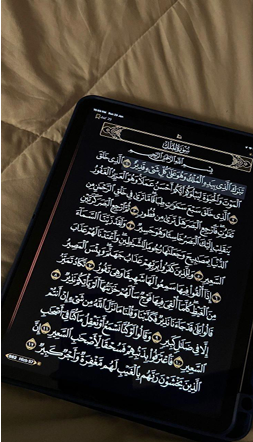
The Digital Teacher Mushaf links memorization with understanding through reliable instant
translations. Interactive audio by skilled reciters with self-repetition ensures correct
pronunciation and Tajweed. Accessible anytime, anywhere, it helps students achieve stronger
and more consistent memorization.
It helps to:
• Correct pronunciation
• Preserve Tajweed rules
• Compare one’s recitation with renowned reciters
• Enhance both auditory and visual memorization
https://noureddinacademy.com/wp-content/uploads/2026/02/Screenshot-2026-02-04-004919.png
- Spaced Repetition Technology
This is the traditional revision method applied digitally. The app reminds the student to review
verses at specific intervals. The better a verse is memorized, the longer the interval before the
next review.
- Visual Applications
Including Qur’an recitation programs, repetition apps, visual tafsir software, mind maps linked
to memorization—these are among the most effective modern tools.
Reminder Apps on Smartphones
Apps like “Ayat”
“Hafiz,”
“Tarteel,”
and others help organize daily memorization and revision
- Digital Schedules
Structured digital timetables allow memorization and review to be organized efficiently.
- Online Qur’an Circles with Interactive Games
These interactive tools help reinforce verses, explain them, and enhance long-term
memorization.

The Golden Rules for Memorizing the Holy Qur’an
1) Sincerity (Ikhlās)
Purify your intention solely for the sake of Allah when memorizing the Qur’an. Memorization is
an act of worship and is not accepted if mixed with showing off or seeking fame.
2) Summary: Correct Pronunciation and Daily Portion
Begin memorization only after mastering proper recitation from a qualified teacher. Assign a
fixed daily portion that suits your ability, accompanied by repetition and melodious recitation to
firmly establish your memorization.
3) Do Not Move On Before Mastery (Summary)
Do not move on to a new portion until the previous one is perfectly memorized and recited
regularly.
4) Stick to One Mushaf
Use only one copy of the Mushaf for memorization, as your memory relies on both auditory and
visual association.
5) Understanding Facilitates Memorization
Comprehending the meanings and linking the verses together aids memorization, though
understanding alone is not enough without consistent repetition.
6) Connecting the Beginning and End of a Surah
Do not leave a Surah incomplete; memorize it fully and recite it smoothly without hesitation.
7) Continuous Recitation to Others (Tasmee‘)
Regularly reciting memorized portions to someone else helps identify and correct mistakes.
8) Ongoing Revision (Summary)
Review the Qur’an daily, at least one Juz’, to reinforce memorization and prevent forgetting.
9) Special Attention to Similar Verses (Mutashābihāt)
Give particular care to similar verses to avoid confusion and forgetfulness.
10)Making Use of the Golden Years of Memorization (Summary)
The best ages for memorization are from childhood to the early twenties, as memorization
during this period is stronger and more enduring

Finally, my Muslim brothers whether Arab or non-Arab make the Qur’an your constant
companion. It is the provision of the believer, your companion in the loneliness of the grave,
and your intercessor on the Day of Resurrection.
The Messenger of Allah ﷺsaid: “Whoever seeks this world let him adhere to the Qur’an;
whoever seeks the Hereafter let him adhere to the Qur’an; and whoever seeks both of them
together, let him adhere to the Qur’an.”
Let every verse you memorize and reflect upon draw your heart closer to Allah Almighty and
make you among those who convey the Message, as the Prophet ﷺ said: “Convey from me,
even if it is one verse”
Sources:
An Innovative Method for Memorizing the Holy Qur’an .
The Golden Rules for Memorizing the Holy Qur’an.
Modern Technological Tools in Teaching and Memorizing the Holy Qur’an.
. Our Children and the Qur’an Course by Dr. Sherif Taha Younes.
. The Golden Rules for Memorizing the Holy Qur’an by Abdul Rahman bin Abdul Khaliq (Taiba
Publishing House)
. Nasamat Reem YouTube Channel
. Memorizing the Holy Qur’an Quickly and with Firm Retention During the Golden Time
. Conditions for Choosing the Best Time to Memorize the Holy Qur’an, Step by Step – Apps like “Ayat”
“Hafiz,”
“Tarteel,”
https://repository.najah.edu/server/api/core/bitstreams/159fb9c2-9d11-48f0-973a
5a38ff8d55dc/content (Shaza essam